

Traditional Surveys vs AI-Powered Feedback
Traditional survey platforms (e.g. email questionnaires, paper forms, even legacy tools like SurveyMonkey or Qualtrics) often yield poor engagement. For example, a case study noted traditional methods typically get 5–15% response rates. In contrast, AI-driven conversational methods can jump to 30–50%, a 3–5× increase. Improved rates come from using natural dialogue, in-app prompts, and rapid translation—features that cut down friction and survey fatigue. In one example, a mobile app team went from ~2–7% response on email surveys to 11–22% after adding localized AI chat surveys.
Feedaura embodies this shift: it collects feedback via website or app widgets, shareable links or QR codes, all feeding into a unified dashboard. This multi-channel approach means users can respond anywhere with just one script tag. Importantly, Feedaura’s AI then “reads between the lines” automatically tagging open-text by theme (e.g. UI, performance) and detecting sentiment. As a result, teams spend 10× less time coding and can focus on action. Many customers also note quicker insights e.g. one firm saw feature improvements driving 22% app usage lift after switching to AI feedback.
Key Features of Feedaura
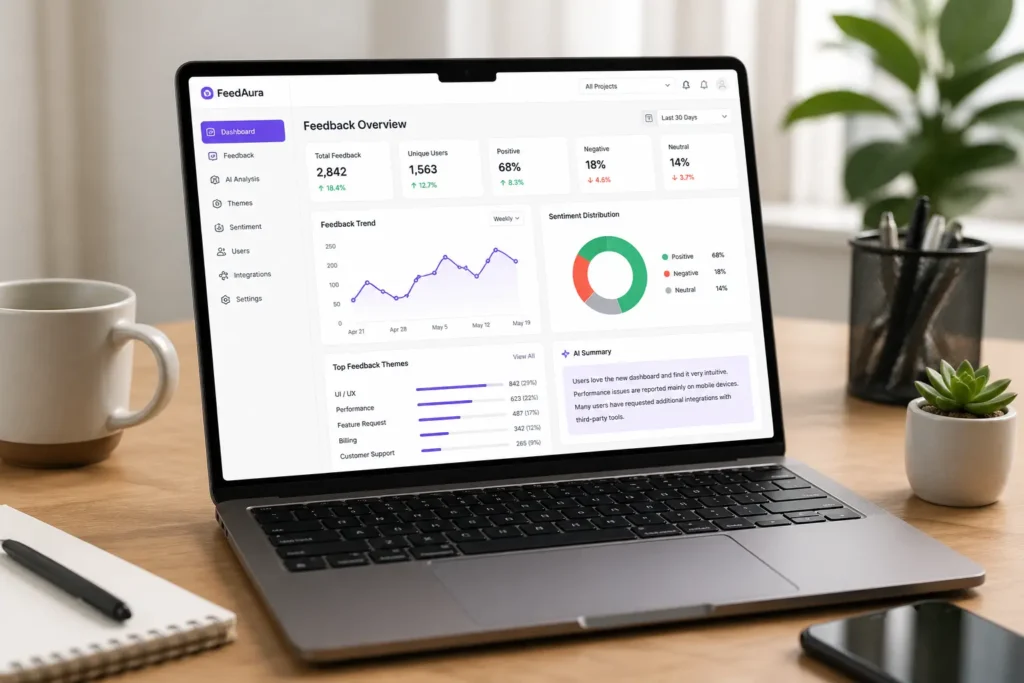
Feedaura is built for teams that “take feedback seriously”. Its core features include:
- In-app & In-page Feedback Widgets: Fully embeddable popups or banners that prompt users at the right moment (exit intent, click, or timed delay). For product teams, this means capturing spontaneous insights (e.g. bug reports, UX comments) with user-friendly formats (star ratings, emoji, text fields).
- Anonymous Multi-language Collection: Users can respond anonymously (no login required), boosting honesty. Feedaura auto-translates 30+ languages into English, so global teams can analyze all responses together.
- Quick Setup: A single script tag in your app is enough, Feedaura promises setup in ~30–60 seconds. There’s no lengthy onboarding or coding effort, unlike some competitors that require custom integration or sales cycles.
- AI Clustering & Sentiment: Every response is scored and grouped by theme on the fly. Feedaura’s AI “reads every response” to surface top issues and trends. This eliminates manual tagging – top complaints or suggestions jump out in the dashboard, often flagged by sentiment (e.g. “suggestion,” “critical”) for quick action. Weekly AI-generated reports summarize what matters most without analyst time.
- Visual Insights Dashboard: Feedback analytics (charts, tables, word clouds) update in real time. Managers see prioritized lists of issues (“people said: …”), sentiment over time, and can export summary reports. Feedaura highlights clear next steps (e.g. “Most urgent: improve feature X”), not just raw data.
- Integrated Alerts and Collaboration: Feedaura can send instant alerts (e.g. via Slack/Telegram) on critical feedback, and lets teams discuss or share insights internally. (For example, Dovetail requires an enterprise plan for such AI insight; Feedaura includes it on all plans.)
Overall, Feedaura turns scattered feedback into a growth engine. By “tracking team health over time” or customer sentiment, teams “act before problems become attrition”. In one case a company shifted from data collection to “meaningful conversations,” identifying hidden user pain points and boosting retention by 25%. Feedaura even claims that users see ~15% ROI lift from targeted improvements guided by its AI.
Stats & Case Studies
Recent reports underscore Feedaura’s value. As noted, engaging customers with AI chat-style surveys can triple response rate. Higher response yields better data for product decisions and user satisfaction. Meanwhile, Gartner finds 91% of service leaders planning to implement AI by 2026 – feedback analytics is part of this trend toward AI-driven CX.
Feedaura’s own metrics are compelling: over 10,000 feedback items analyzed with 97% accuracy in its AI summaries. Many clients report direct business impact: e.g. a 15–25% increase in customer retention after acting on Feedaura insights. Another case (Perspective AI) showed using conversational AI increased engagement to 30–50%, uncovering 3–5x more feedback than legacy surveys. In summary, leveraging AI for feedback doesn’t just save time, it meaningfully improves products.
Feedaura vs. Competitors
| Feature | Feedaura | Dovetail | Hotjar |
| AI-powered analysis | ✔ Built-in thematic clustering & sentiment on all plans | ❌ AI insights only on enterprise tier | ❌ No text analysis (focuses on heatmaps, recordings) |
| Feedback widget (in-app) | ✔ Highly customizable pop-up widget (lightweight script) | ❌ No native in-page widget (focused on research repositories) | ✔ On-site surveys exist, but limited analysis features |
| Pricing transparency | ✔ Public pricing, free tier available | ❌ Contact-for-pricing (no public rates) | ✖️ Free basic tier but higher paid plans (no public breakdown) |
| Key integrations | ✔ Slack/Telegram alerts, APIs for CRM/data | ✔ (Supports Slack, Zapier) | ✔ Slack, Zapier (for alerts and workflow) |
Feedaura stands out for its combination of AI insight and ease of use. It is explicitly marketed as an alternative to tools like Dovetail (without requiring sales calls) and Hotjar (“No heatmaps. No recordings. Just answers,” says their pitch). In practice, Feedaura offers the Best AI feedback collection and analysis experience by bundling multi-channel widgets, automated summaries, and clear dashboards all without heavy setup or cost.
Hello Womguide Com,
This is Chelsea Aleston from Central Valley Asphalt. We’re reviewing potential partners for an upcoming Q4 2026 project and wanted to check your availability and interest in receiving more details.
Scope information will be shared once we confirm your interest..
Sincerely,
Chelsea Aleston
Vice President
Central Valley Asphalt.