

Build a Structured Process for Comparing Tech Products
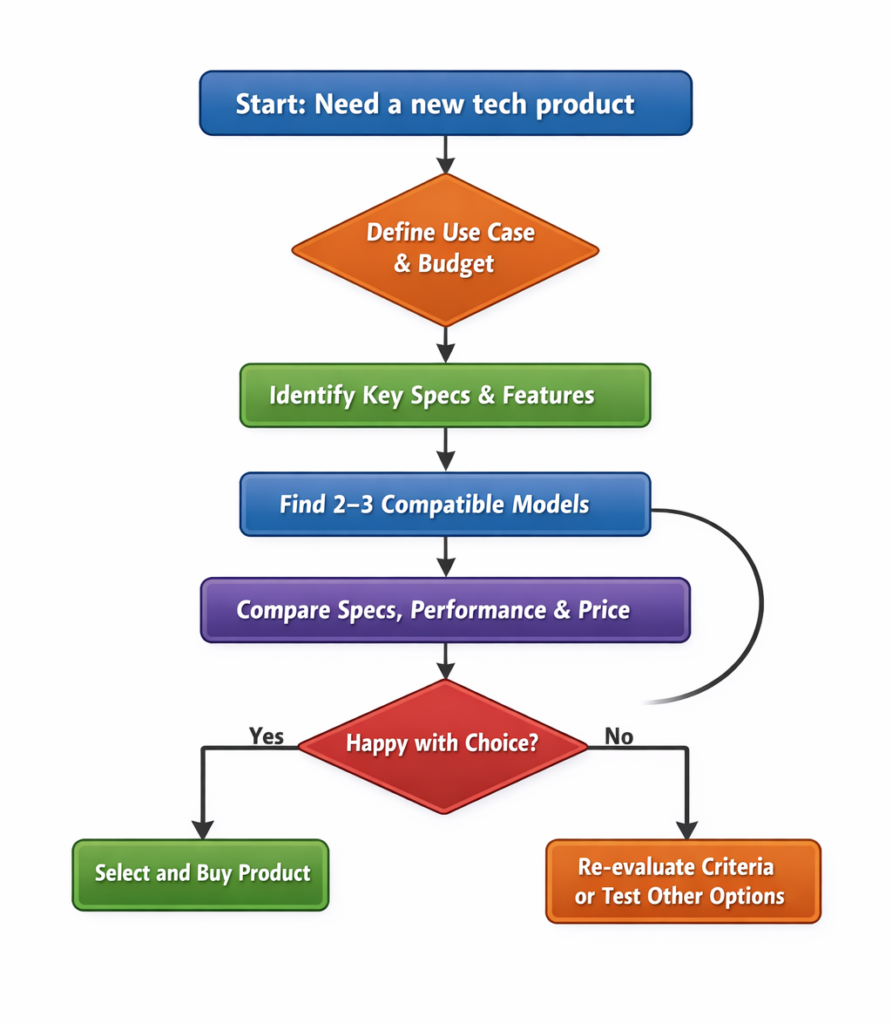
Embedding structured comparison methods into your buying process can save time and prevent regrets. As one guide puts it, a “structured checklist” helps you avoid impulse decisions and choose the right tech product for your needs. The first step is always defining your use case and budget. Are you buying a laptop for heavy video editing or just browsing and emails? The answer sets all priorities (speed vs. battery life vs. weight). Once clear, identify the core specifications that matter most for that use. Experts recommend focusing on 2–3 main specs per category – for example, CPU, RAM, and SSD for laptops, or processor, memory, and battery size for smartphones. Ignore flashy but minor features; instead, match the specs to your tasks. If in doubt, refer to authoritative reviews or tech blogs to see how those specs translate into real-world results.
Shortlisting and Comparing Multiple Product Options
Choosing between alternatives requires direct comparisons. Always shortlist at least two or three candidate models. Create a simple side-by-side table (option vs. attributes), one of the most effective layouts for scanning differences. Include columns for key specs, price, weight, etc. (see table below for an example). According to Nielsen Norman Group, well-designed tables (with products as columns, specs as rows) make it much easier to spot trade-offs and similarities. Keep the table concise: comparing more than ~5 items can overwhelm your decision process. Many comparison websites (including Vergeliking.nl) follow this format to help buyers compare on-screen.
Evaluating Real-World Performance and Reliability
Marketing claims often exaggerate – battery life is a common example. One laptop guide warns that specs like “10hr battery” often mean 5–6 hours in actual use. Always look for independent review sites (NotebookCheck, PCMag, etc.) and user forums where people share measured performance. Also, consider longevity: find out how long the manufacturer provides OS or firmware updates. The NIST cybersecurity agency explicitly highlights that timely software patches are critical for device security and lifespan. A longer update policy (e.g. 5+ years of Android updates on modern phones) can be a big plus, whereas some brands only guarantee 2–3 years. Don’t forget basic reliability checks: read about any common hardware issues, and verify warranty and customer support. Experts note that warranty coverage (duration and scope) often reflects a manufacturer’s confidence in its product. A cheap gadget with minimal warranty can cost more in the long run if it fails.
Using User Reviews and Community Feedback
Get feedback from users. Besides official specs, peer reviews and community discussions can uncover hidden flaws or benefits. For instance, headphone buyers often check audio forums and Reddit threads to gauge noise‑cancellation quality and fit. Even for high-end items, user comments can highlight issues like overheating, noisy fans, or outdated parts. One common buying mistake is ignoring user feedback – reviews and benchmarks are “gold” for catching what spec sheets miss. Similarly, be wary of hype: if everyone is talking about a “must-buy” feature, ask yourself if it truly improves your experience.
Using Comparison Tools and Price Trackers
Use online tools and trackers to stay current. Modern shoppers benefit from price and deal trackers. Many product comparison platforms (e.g., CamelCamelCamel, Google Shopping, PriceSpy, or even Vergeliking.nl) allow setting alerts for price drops. According to a recent guide, these tools present key details side-by-side (price, specs, ratings) and often include price tracking and alerts. For example, if you’re eyeing a smartphone, a tracker can show its average and lowest Amazon prices over time, helping you spot if it’s a good moment to buy. Likewise, retailer-built comparison charts (like on certain PC or appliance stores) can be used. The advantage is clear: instead of browsing ten sites, you see everything in one table. To make your own comparison, you might even compile a spreadsheet of spec details, warranty terms, and pricing across vendors. Emerging technologies, such as agentic AI customer service, are starting to take this a step further, autonomously gathering product information and helping users make decisions more efficiently. Similarly, many advanced digital tools designed for data aggregation and analysis — like those highlighted in this guide to the 10 Best Digital Marketing Agency Tools for 2025 — illustrate how automation and smart software can streamline complex decision workflows.
A Simple Tech Product Comparison Table
Below is an example of a comparison table for three laptop models. Notice how the columns line up the key specs (CPU, RAM, etc.) and the rough price range, making differences obvious:
| Model | CPU | RAM | Storage | Battery Life | Price (approx.) |
| MacBook Air 13″ (2026) | Apple M4 8-core | 8 GB | 256 GB SSD | ~15 hours | ~€1,000 |
| Dell XPS 13 (2026) | Intel Core i7-14th | 16 GB | 512 GB SSD | ~12 hours | ~€1,200 |
| Lenovo IdeaPad Flex 5i (2025) | Intel Core i5-13th | 16 GB | 512 GB SSD | ~10 hours | ~€800 |
Summary
In summary, an effective buying process is systematic. Define your needs first, then zero in on the specs that matter most. Use a mix of quantitative comparison (tables, trackers) and qualitative feedback (reviews, forums) to evaluate each option. According to usability experts, well-designed comparison tables and charts help buyers make “compensatory decisions” by scanning differences. Finally, always double-check practicalities: warranty, return policies, and long-term support.
For up-to-the-minute price and spec comparisons on many electronics, use dedicated comparison sites. In the Dutch market, for example, you can view current prices across retailers on Vergeliking.nl. This kind of platform pulls live data so you can finalize your decision with confidence. By following a structured approach and using these tools, you’ll avoid common pitfalls like buyer’s remorse and ensure the product you pick truly fits your needs.