A lot of pages get decent traffic and still fail to turn that attention into signups, inquiries, or downloads. The page may have useful information, but the visit ends quickly, the tab gets closed, and the reader moves on before any real action happens.
The same content can behave very differently once it becomes a PDF. A saved file sits on the device, gets opened again later, and often gets shared inside a team chat, an email thread, or a folder someone plans to revisit.
That difference matters more than it first seems. A web page is often treated like something to skim, while a PDF is more often treated like something worth keeping.
To actually implement this effectively, many marketers rely on the best digital marketing agency tools to use in 2025, which help create, distribute, and track high-converting PDF assets at scale.
Why Web Pages Often Lose Momentum
Most people do not read web pages in one calm sitting. They open a page, scroll quickly, check another tab, and then return only if something grabs enough attention to slow them down.
That pattern creates a weak conversion path. The reader may like the content, but the page still competes with notifications, open tabs, and the general habit of browsing without much commitment.
There is also a presentation issue. A page can look slightly different across devices, the layout can move around more than expected, and long content can start to feel endless when it stays inside a browser window.
What Changes When the Content Becomes a PDF
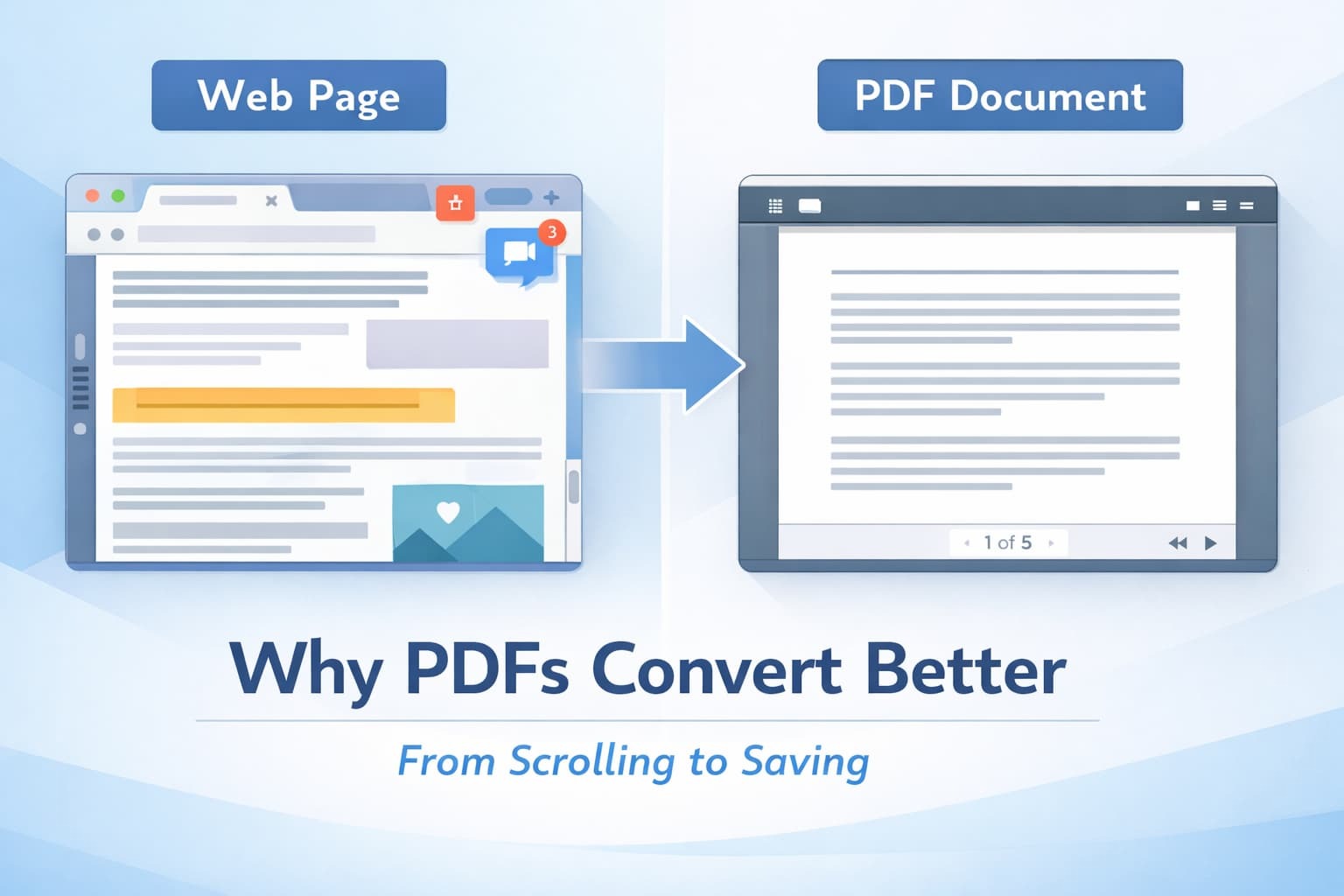
A PDF changes the experience because it turns the content into something that looks finished. Instead of one more page inside a browser, it becomes a file with boundaries, pages, and a form that suggests the content is ready to keep.
That small shift changes user behavior. Once a document is downloaded, the reader has already taken one action, and that action creates a stronger chance of a second one later.
A saved file also has a different kind of visibility. It can sit in Downloads, appear in email attachments, or get forwarded to another person without needing the original page visit to happen again.
Turning Existing Text Into a Downloadable PDF
A lot of useful business content already exists in text form. It may be sitting inside a blog draft, a help page, a sales note, an onboarding document, or a lead magnet outline that never got turned into a finished file.
That is where the workflow becomes practical. Instead of building a full design asset from the beginning, you can take the text, organize the paragraphs, add a proper heading structure, and convert it into a document people can download.
On screen, that process is usually straightforward. You place the text inside an editor, review the spacing, check where headings begin and end, and make sure the document reads like a complete resource instead of copied website content.
This is also the point where poor preparation creates problems. If the text is pasted without structure, the final file can look uneven, crowded, or rushed, which weakens the trust a PDF is supposed to create.
A cleaner approach is to prepare the content first and then convert it with a dedicated tool. If you want to turn plain text into a downloadable file without moving into a heavy document workflow, you can use Text to PDF converter to organize written content and turn it into a document that is easier to save, send, and revisit.
Why PDFs Often Create More Trust
Trust does not always come from claims. A lot of it comes from how stable the experience looks when someone opens the content.
A web page can be useful and still look temporary. Menus stay visible, page sections keep stretching downward, and small distractions around the main content can reduce the sense that the information is complete.
A PDF usually removes that problem. The structure stays fixed, the pages look intentional, and the reader sees a document instead of a browsing session.
That is one reason downloadable guides still work well in business. People tend to take documents more seriously when the format looks settled and the reading experience stays the same from one screen to another.
Trust does not always come from claims. A lot of it comes from how stable the experience looks when someone opens the content.
A web page can be useful and still look temporary. Menus stay visible, page sections keep stretching downward, and small distractions around the main content can reduce the sense that the information is complete.
A PDF usually removes that problem. The structure stays fixed, the pages look intentional, and the reader sees a document instead of a browsing session.
That is one reason downloadable guides still work well in business. People tend to take documents more seriously when the format looks settled and the reading experience stays the same from one screen to another.
Why That Trust Helps Conversions
A conversion rarely depends on information alone. The reader also needs enough confidence to believe the content is worth saving, sharing, or acting on.
PDFs help at that stage because they create a stronger pause in the journey. Someone downloads the document, opens it later, and reads it with more attention than they gave the page during the first visit.
That second look is often where the real conversion path begins. An inquiry, a signup, or a reply can happen after the file has already been saved, not while the person is still casually moving through the site.
This is why PDF offers still appear in serious lead generation flows. The format supports follow up behavior better than a normal page that disappears as soon as the tab closes. You can also see how downloadable content improves engagement from this content marketing benchmark report.
A conversion rarely depends on information alone. The reader also needs enough confidence to believe the content is worth saving, sharing, or acting on.
PDFs help at that stage because they create a stronger pause in the journey. Someone downloads the document, opens it later, and reads it with more attention than they gave the page during the first visit.
That second look is often where the real conversion path begins. An inquiry, a signup, or a reply can happen after the file has already been saved, not while the person is still casually moving through the site.
This is why PDF offers still appear in serious lead generation flows. The format supports follow up behavior better than a normal page that disappears as soon as the tab closes.
Situations Where PDFs Perform Better Than Pages
Some content types work fine as web pages but become more useful once they are turned into documents. Guides, checklists, internal references, proposals, and product explainers are common examples because people often want to come back to them more than once.
A browser page is good for discovery. A PDF is often better when the content needs to be reviewed carefully, passed to another person, or stored for later discussion.
That difference matters in business settings. A founder may forward a PDF to a partner, a manager may send it to a team member, and a potential client may save it for later review instead of trying to remember which page they opened two days earlier. This behavior is also discussed in this study on user reading behavior online.
Some content types work fine as web pages but become more useful once they are turned into documents. Guides, checklists, internal references, proposals, and product explainers are common examples because people often want to come back to them more than once.
A browser page is good for discovery. A PDF is often better when the content needs to be reviewed carefully, passed to another person, or stored for later discussion.
That difference matters in business settings. A founder may forward a PDF to a partner, a manager may send it to a team member, and a potential client may save it for later review instead of trying to remember which page they opened two days earlier.
What Users Often Do After a PDF Is Offered
The user journey usually changes once a PDF appears on the page. Instead of reading and leaving, people now have a reason to take the content with them.
Some save it for later because they are busy at that moment. Some send it to another person because the document is easier to pass around than a long URL. Some return to the file during a decision stage, which is exactly where many conversions start to happen.
That pattern is useful because it extends the life of the content. A web page may get one quick look, but a PDF can continue working long after the first visit is over.
Mistakes That Reduce the Value of a PDF Offer
Not every PDF improves conversion. A weak document can still get downloaded and then ignored if the content looks rushed or the file creates friction.
Formatting is one common problem. When headings are unclear and the spacing is uneven, the file starts looking like copied text placed inside pages rather than a document built for reading.
File weight is another issue. A document that opens slowly or looks awkward on smaller screens can lose attention almost as quickly as a cluttered web page.
The purpose also has to be obvious. If the visitor does not understand why the download is useful, the PDF becomes just another button instead of a next step that feels worth taking.
Web Pages and PDFs Work Best Together
This is not really a choice between one format and the other. A web page brings discovery, search visibility, and the first visit, while a PDF supports retention, review, and follow up.
That combination is why the format still matters. The page introduces the idea, but the document gives the reader a better way to keep it close.
When the content is worth revisiting, a downloadable PDF can support more serious attention and better action than the page alone. That is why PDF downloads still work so well for conversions, especially when the content already solves a real problem and the document is prepared with care.